
Remote Jobs That Train You: What You Need to Know Before You Apply
Remote jobs that train you are real, widely available, and a genuine way to break into a new career — even with zero experience.
Here’s a quick overview of the best options right now:
| Job Title | Industry | Typical Pay | Experience Needed |
|---|---|---|---|
| Customer Support Rep | Customer Service | ~$18-$20/hr | None |
| Junior IT Support Specialist | Tech | ~$73k/year | None |
| AI Data Trainer / Fellow | AI & Tech | $74-$300/hr | Domain knowledge |
| Web Development Fellow | Tech / Marketing | $17.50/hr | Basic HTML/CSS |
| Insurance Agent | Insurance | Varies | None |
| HR / People Operations | Human Resources | $87k-$103k/year | Entry-level |
| Trust & Safety Analyst | Tech | $47k-$63k/year | None |
There are currently over 7,000 paid remote training jobs listed in the U.S. alone. Many are entry-level. Most pay you from day one.
So if you’ve been putting off a career change because you don’t have the “right” skills yet — this changes things.
The job market has shifted. Companies across customer service, tech, healthcare, and AI are actively hiring people with no prior experience, then training them on the job — remotely. You don’t need a degree. You don’t need to commute. In many cases, you don’t even need a resume that looks impressive yet.
What you do need is a clear picture of where to look, what to expect, and how to avoid the scams hiding among the real opportunities. That’s exactly what this guide covers.
Why Remote Jobs That Train You Are a Career Game-Changer
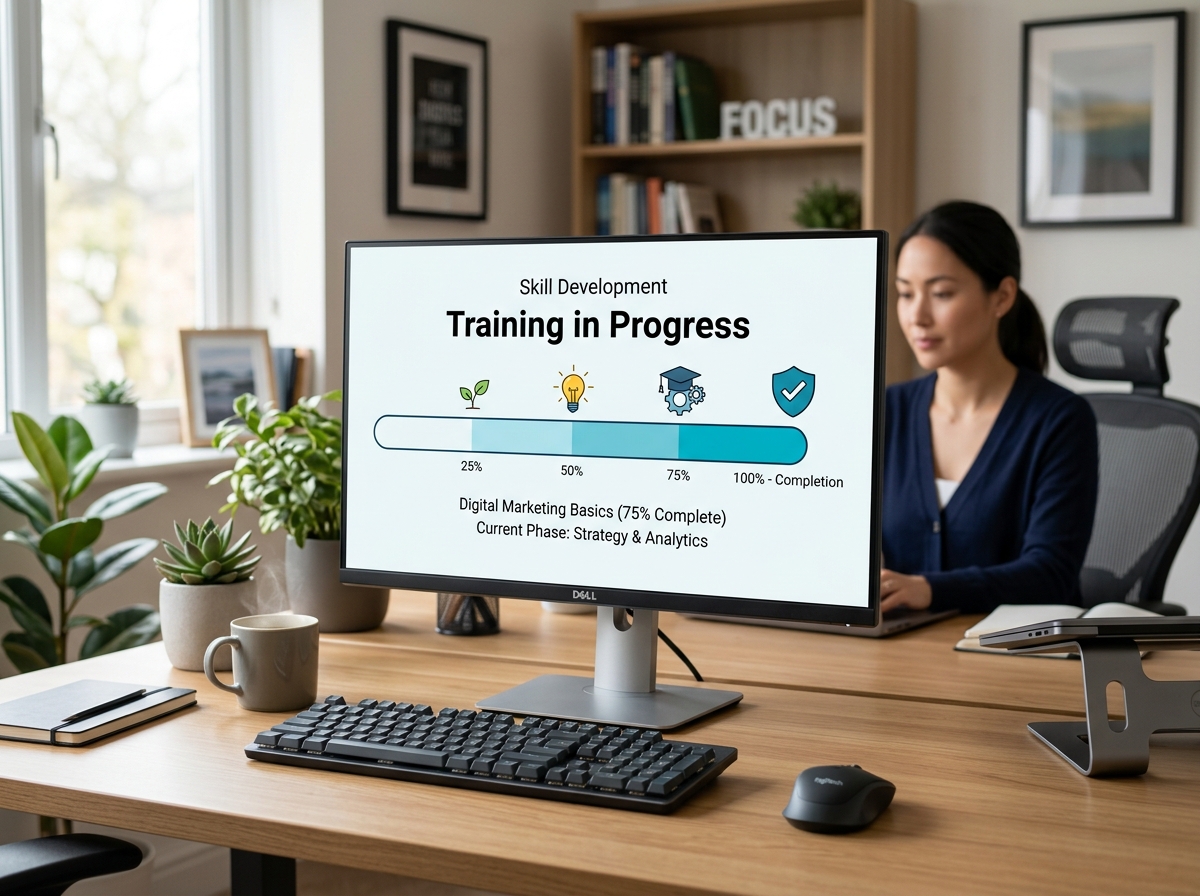
We often think of “training” as something we have to pay for—like a college degree or a coding bootcamp. But remote jobs that train you flip that script. Instead of draining your bank account to learn a skill, these roles allow you to earn a paycheck while you master the tools of the trade.
For many of us, this is a total game-changer. If you are breaking into remote work as a beginner, the biggest hurdle is usually the “experience required” wall. Companies offering on-the-job training effectively tear that wall down. They aren’t looking for what you know today; they are looking for your potential to learn tomorrow.
This accessibility makes these roles ideal for career pivoters. Whether you’re moving from retail to tech support or from teaching to AI training, these programs provide a safety net. You get to test-drive a new industry without the financial risk of unpaid internships.
| Feature | Traditional Education/Bootcamps | Paid Remote Training |
|---|---|---|
| Cost | $5,000 – $50,000+ | $0 (They pay you!) |
| Time to Income | 6 months to 4 years | Day 1 |
| Curriculum | Theoretical & General | Practical & Job-Specific |
| Job Guarantee | Rarely | You’re already hired |
Beyond the money, the professional growth is rapid. Because the training is designed by the employer, you learn exactly the macros, software, and workflows used in the real world. You aren’t just learning “Customer Service”; you’re mastering specific platforms like Zendesk or Salesforce, which makes your resume shine for future roles.
Top Industries Offering Remote Jobs with Training Provided
If you’re hunting for remote jobs that train you, you need to know where the “hot spots” are. While almost any industry can offer training, some sectors have built their entire hiring model around it.
- Customer Service and Support: This is the largest sector for entry-level remote work. Companies frequently hire large cohorts and put them through 1–3 weeks of intensive virtual onboarding. You’ll learn communication protocols, product knowledge, and specialized software.
- Information Technology (IT): Don’t let the tech jargon scare you. Many firms are desperate for Remote Junior IT Support staff. They provide the “playbooks” for troubleshooting, so as long as you can follow instructions and enjoy solving puzzles, they will teach you the rest.
- Artificial Intelligence (AI) Development: This is the newest frontier. AI models need humans to “teach” them how to think, write, and code. Roles like AI Support Developers or LLM (Large Language Model) Trainers often come with step-by-step complimentary training.
- Healthcare Administration: Medical coding, billing, and virtual admissions roles are booming. Because these roles are highly regulated, companies must train you on specific compliance standards, making them great “learn-as-you-go” opportunities.
- Insurance and Finance: From claims adjusters to remote bookkeepers, these industries offer structured paths. Many even help you get licensed while you work.
Finding a role in these sectors is a great way of balancing work and wanderlust, as many of these training programs are designed to be completed entirely online from wherever you have a stable internet connection.
5 Specific Remote Jobs That Train You for Success
Let’s get specific. If you’re ready to apply, here are five roles that frequently offer robust training programs for new hires.
Junior IT Support Specialist
This is one of the most lucrative entry-level remote jobs that train you. In a Remote Junior IT Support Role, you might start with a salary around $73,000 per year. The training usually involves shadowing senior technicians and learning how to handle network basics, password resets, and cybersecurity habits. You don’t need to be a “computer whiz” on day one—you just need to be a good communicator who can follow a troubleshooting guide.
AI Support Developer and Trainer
The AI revolution needs human guidance. Platforms like the Handshake AI Program offer paid, remote work for both experts and generalists. Whether you have a PhD or just a sharp eye for grammar, you can get paid to improve AI models. Some opportunities, like the Online AI Support Developer role, offer step-by-step training on no-code tools, allowing you to build automation systems without writing a single line of computer code.
Web and Email Development Fellow
For those with a creative streak, fellowships are a fantastic bridge. Programs like the Web Dev Fellowship at UIE provide a six-month path where the first half is dedicated almost entirely to training. You’ll learn HTML, CSS, and UX design while earning an hourly wage (often around $17.50/hr). By the end, you’ll have a portfolio of real-world projects to show future employers.
Customer Trust & Safety Analyst
In this role, you help keep online platforms safe by reviewing content and enforcing community guidelines. Companies like Instacart or Coinbase often hire for these positions, providing 2–4 weeks of training on legal process playbooks and scenario practice. It’s a great way to enter the tech world with a salary often ranging from $47,000 to $63,000.
Claims or Complaints Analyst
Financial and insurance companies need people to investigate disputes. The training is usually very structured because it involves legal regulations. You’ll learn how to use case management systems and how to apply company policy to real-world “complaints.” It’s detail-oriented work that rewards those who are thorough and eager to learn.
What to Expect During Your Remote Training Program
So, you got the job! What happens next? Remote training isn’t just watching boring videos (though there is some of that).
The Format: Most programs use a “blended” approach. You’ll have self-paced modules, live Zoom “classrooms,” and 1-on-1 mentorship. You might spend your first week shadowing a senior employee through screen-sharing.
The Duration:
- Short Ramps (1-3 weeks): Common for customer service and data entry.
- Medium Ramps (1-3 months): Typical for IT support or specialized sales.
- Long Fellowships (6 months+): Common for technical roles like web development.
Paid vs. Unpaid Training: In the U.S., the law is generally on your side. If the training is mandatory and job-related, you must be paid. However, some “pre-employment” certifications might be unpaid. Always clarify this before signing. Legitimate remote jobs that train you will clearly state the hourly rate for training hours.
Equipment Requirements: Don’t rush out and buy a $2,000 MacBook. Many companies will ship you a “work kit” including a laptop, headset, and even a webcam. If they don’t, you’ll need to ensure your laptop life is up to par with a reliable internet connection and a quiet space. You’ll also likely be introduced to essential productivity tools like Slack, Zoom, and Trello during your first few days.
How to Land Remote Jobs That Train You with No Experience
When you have no experience, your resume needs to tell a different story. Instead of focusing on what you did, focus on how you learn.
- Highlight Transferable Skills: If you worked in a restaurant, you have “high-pressure conflict resolution” and “multitasking” skills. If you were a teacher, you have “complex information synthesis.”
- Use “Learning” Keywords: Use phrases like “eager to master new systems,” “fast learner,” and “trainable.” Mention any self-taught skills, like “Mastered Excel VLOOKUP via independent study.”
- Tailor for the Industry: If applying for an AI role, mention your curiosity about LLMs. If applying for IT, mention your experience helping friends or family with tech issues.
- Be a “Pro” in the Interview: Since they are training you, they are looking for “soft skills.” Show up early to the video call, have a clean background, and ask sharp questions about their training process.
Red Flag Alert: To stay safe, a legitimate employer will never ask you to pay for your own training or equipment via a check they “reimburse” you for later. If they ask for money upfront, it’s a scam. Use vetted platforms like FlexJobs or LinkedIn to find verified listings.
Frequently Asked Questions about Remote Jobs That Train You
Do companies pay you during remote job training?
Yes, most legitimate companies do. Under U.S. FLSA regulations, if the training is mandatory and you are performing work, you must be compensated at least the minimum wage. Many of the roles we’ve discussed pay your full starting salary from day one of training. This is a huge benefit for those traversing the best countries for remote work who need a steady income.
How long does remote job training usually last?
It varies wildly by role. A simple data entry or survey panelist role might only require a few hours of orientation. However, a Junior IT Support role or a Web Dev Fellowship can involve 3 to 6 months of structured learning and mentorship. Most corporate remote roles (like HR or Customer Support) have a “ramp-up” period of 2 to 4 weeks.
Where can I find legitimate remote jobs that train you?
- Vetted Job Boards: Sites like FlexJobs and Virtual Vocations specialize in screened remote roles.
- LinkedIn: Use filters for “Remote” and search for keywords like “paid training” or “entry level.”
- Company Fellowship Pages: Look for “Fellowship” or “Apprenticeship” programs at major tech companies.
- Specialized Platforms: For AI work, check out the Handshake AI Program or Turing.
Conclusion
The “experience gap” is a hurdle, but it doesn’t have to be a wall. Remote jobs that train you represent a shift in how the world works. Companies have realized that a dedicated, curious person who is “eager to learn” is often more valuable than someone with a stale degree.
By choosing a path that offers on-the-job training, you aren’t just getting a job; you’re getting a free education that pays you back every single Friday. Whether you’re troubleshooting tech issues from your kitchen table or helping shape the future of AI, the opportunities are waiting.
Ready to take the leap into the remote lifestyle? Start your journey with the FinancePayX Digital Nomad Life guide and discover how to turn your couch into the ultimate career launching pad.
